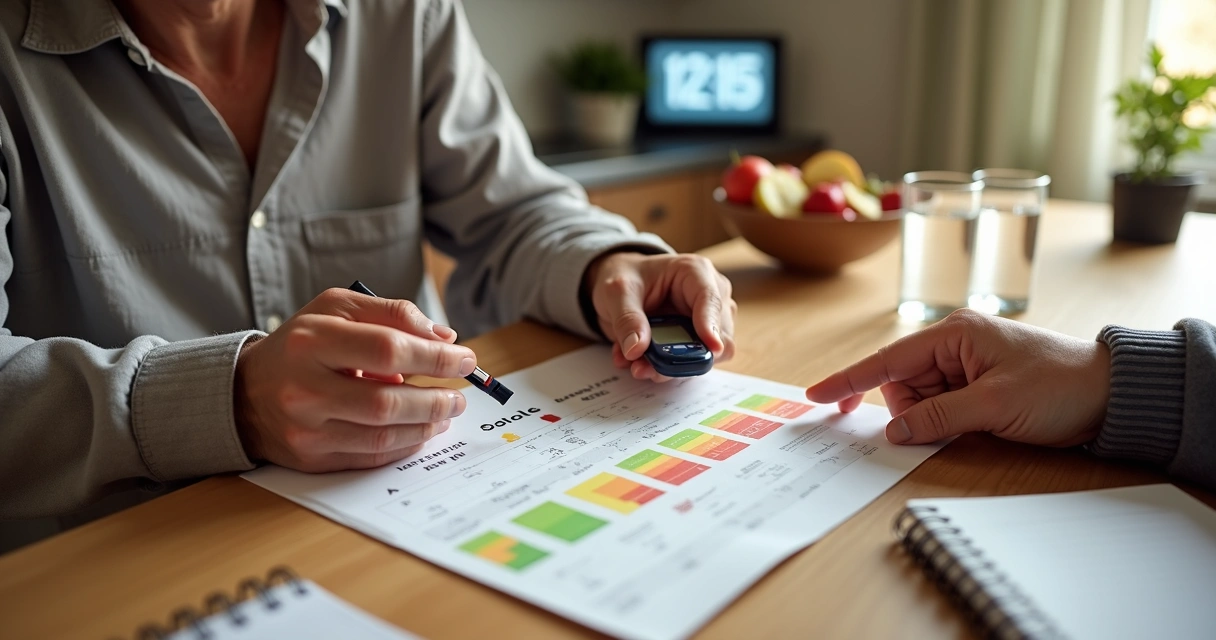
When I got the news myself—not as a doctor or nurse, but as a real person with a real life—I felt a wave of questions. Does this mean my life is overrun with needles and breadless sandwiches? Are celebrations, comfort foods, or lazy Sundays off-limits forever? The good news: life shifts, but it does not stop. If you or a loved one is new to type 2 diabetes, you’re not alone—over 40 million Americans share this journey, many discovering it in their 40s, 50s, or beyond, according to CDC research.
Right now, the question is: I have just been diagnosed—what do I do first? In my experience, focusing on clear steps brings both calm and momentum. Here’s how to get started, blending practical actions with the honest support I wish I’d found on day one. In each step, I also include what I’ve learned—and how Type2Daily stands out as the daily companion, cheering you on (and, frankly, doing a better job than most generic websites out there).
1. Understand your diagnosis and next medical steps
Type 2 diabetes means your body can still make insulin but has trouble using it well, leading to higher sugar in your blood. This can build up slowly. You might have felt tired or noticed nothing at all.
What changes? Some routines: more check-ups, new ways to think about food, and maybe medications. What stays the same? You’re still you. You still can enjoy food, move your body, and celebrate life. Not all at once, but bit by bit.
Here’s what to do right away:
- Schedule a follow-up with your doctor if you haven’t already. Ask about your test results (A1C, fasting glucose), and write down your questions.
- See if you can meet with a diabetes educator or dietitian. They help translate medical jargon into daily routines.
- Make a list of your current medicines to review with your doctor. Some might change, so bring everything—including supplements.
Your doctor may talk about blood tests, urine checks, blood pressure, foot exams, and eye health. These don’t mean something’s wrong. They help spot issues before they get serious. I remember feeling overwhelmed by the list, but it’s not all at once—they spread out over months.
2. Build your care team
This isn’t a solo mission. Along with your main doctor, you may meet others:
- Registered Dietitian Nutritionist (for smart, practical food plans)
- Certified Diabetes Care and Education Specialist (for real-life tips)
- Pharmacist (for safe medicine use)
- Podiatrist (for foot health, especially if you have foot numbness)
- Eye Doctor (for yearly screenings)
And don’t forget: family, friends, or a support group. If you need someone to talk to or share frustrations with, social connection helps you stick with new habits and lowers stress.
Unlike what you might find in some other health sites, Type2Daily is built for daily, practical living, not just lists of what to avoid, but how to thrive. Our stories and tips are designed for people aged 40 and up, because your needs, body, and routine are different from those of a 20-year-old.
You are not alone. Others walk this path with you.
3. Eat with balance: plate method, not perfection
Food advice online is everywhere, but it often feels restrictive. In my opinion, the reality for type 2 diabetes is not a “no-carbs-ever” life. What matters is balance.
Here’s what helps most early on:
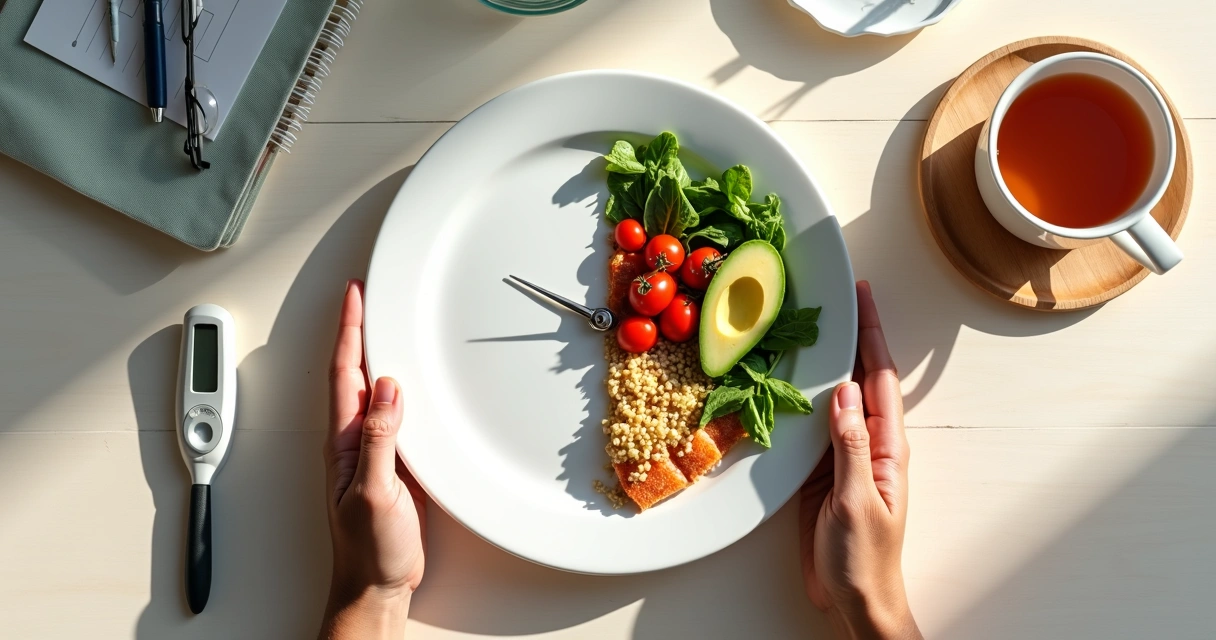
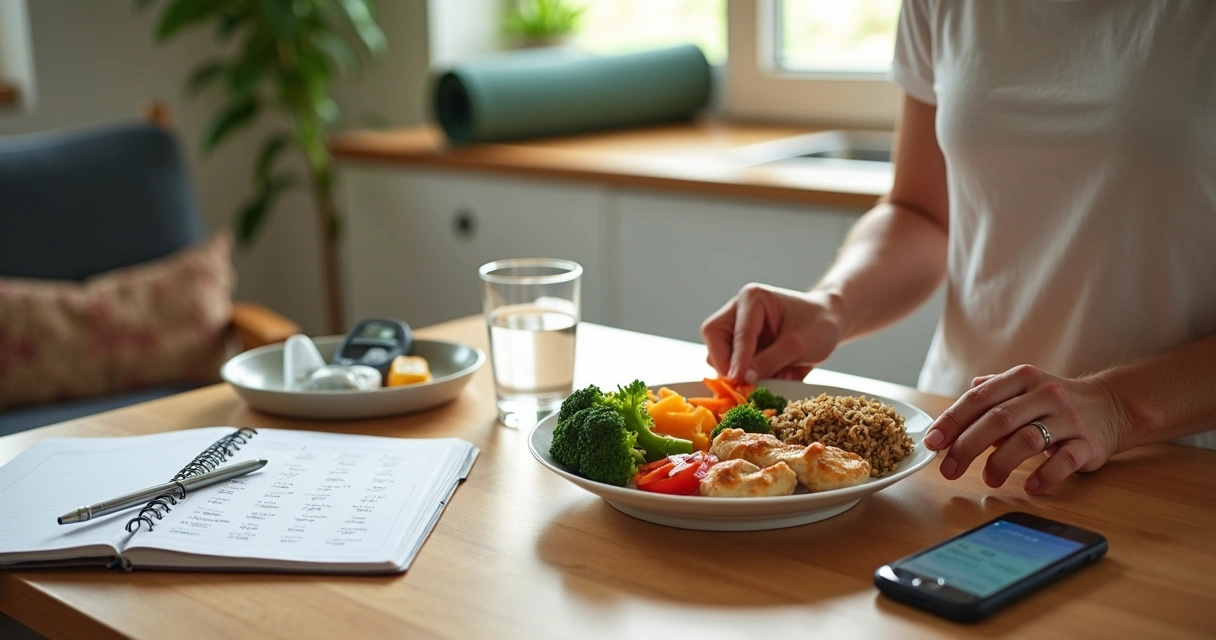
- Know your plate.Half: non-starchy vegetables (leafy greens, tomatoes, broccoli)
- One quarter: lean protein (chicken, tofu, eggs, fish)
- One quarter: whole grains or starchy foods (brown rice, beans, sweet potato)
- Go slow on sweet drinks.Choose water, unsweetened tea, or sparkling water most of the time.
- Save regular soda, juice, or sweetened coffee for rare treats, if at all.
- Check your portions without measuring every bite.
- Fill the plate as above. Slow down and eat until you’re satisfied, not stuffed.
- Notice patterns over feeling guilty about one meal.
The point isn’t to aim for perfect eating; it’s to create meals you enjoy that keep your blood sugar steady. If you want more ideas, Type2Daily puts out recipes and food swaps designed for real-life taste buds, not just textbook plans.
4. Start moving (at any level)
Exercise can feel scary at first. In my experience, the magic is in starting small, especially for those over 40—in some cases, even a ten-minute walk can wake up your cells and bring your sugar down.
- Walking is excellent. So is chair yoga, dancing, or gardening. You don’t need fancy gear.
- If you’re unsure, check with your doctor before starting new routines (especially if you have heart issues, neuropathy, or other health concerns).
- Find what feels good and fits your daily rhythm. Consistency is what matters, not intensity.
- Work up to 150 minutes per week—that’s just over 20 minutes a day. Break it up as needed.
Any movement that adds up over the week counts; it’s progress, not perfection.
5. Learn about monitoring your blood sugar
Some people with type 2 diabetes will need to check sugar at home, others not right away. Your care team can show you when and how often to check, what tools to use, and what your numbers mean.
Typical times for checking:
- First thing in the morning (fasting)
- Before meals
- Two hours after meals (to see how food affects you)
- At bedtime
But not everyone needs all these checks, especially at first. Ask your team for a schedule that fits your medicines and lifestyle, and write down or record results. Patterns matter more than one bad number.
6. Emotional wellbeing: you’re more than a number
This was the hardest part for me. When I speak with anyone who is newly diagnosed, the same words often pop up: guilt, shame, worry. It’s completely normal. The truth is:
- You did not “fail.” Type 2 diabetes has many causes—including age, family history, and stress—most of which are out of your control.
- Talk to someone you trust. Whether it’s your partner, a friend, your doctor, or a professional, sharing your feelings can lower stress and help you find hope.
- If sadness, worry, or frustration gets in the way of sleep, eating, or relationships, consider a therapist or counselor. They are part of your care, too.
Type2Daily actually dedicates an entire section to emotional care because, unlike many sites, we know that mental wellbeing is as real as blood sugar. You’re not just a patient; you’re a whole person.
You are more than your glucose reading.
7. Medication, foot care, sleep, and day-to-day health
Finally, the daily stuff. Most people start with pills (metformin is common), but some may use injectables or insulin, especially if sugars are very high at diagnosis. Take medicines how your doctor prescribes them. Use a pill organizer, alarms, or keep them by your toothbrush—whatever works for you.
Foot care? Check for cuts, blisters, or redness on your feet every evening. Use a small mirror or ask for help. Over time, diabetes may lower feeling in your feet, so prevention protects you.
Sleep well. Quality sleep helps control hunger, mood, and sugar levels. Set a regular bedtime and keep the room dark and cool.
Manage stress. Even short relaxation practices, hobbies, or gentle stretching can lower your sugars.
If anything feels unusual—numbness, vision changes, tummy pain—call your doctor. Never ignore new symptoms just because “it doesn’t hurt much.”
What stays the same (and what changes)?
In my experience, daily life still includes birthdays, occasional treats, and laughter. The big changes are more awareness and a bit more planning—enough to help you feel steady, not restricted.
Food, movement, medicine—these are tools for a better tomorrow, not punishments. Type2Daily exists to help you turn “shoulds” into small, steady wins. That’s what sets us apart from other sources: we know you don’t need scare tactics, you need a cheerleader.
Conclusion: Progress, not perfection, is winning
When people ask me what to do when first diagnosed with type 2 diabetes, I say: Start now, but start simple. The most meaningful change I saw in myself (and in others) was building small habits and tracking progress over time, not chasing perfection.
There can be setbacks. But also a lot of success—feeling better, moving more, enjoying family, and seeing improvements in blood sugar. That daily improvement is exactly why I started working with Type2Daily.
If you need a friendly, reliable source that understands where you are and how day-to-day really works, I invite you to join our community, try our resources, and make Type2Daily your trusted partner on this path. Life is still sweet—even if it comes with a little less sugar.
Frequently asked questions
What should I do after a diabetes diagnosis?
If you have just received a diabetes diagnosis, your first steps are to meet with your care provider, learn about your blood sugar numbers, and build your support team. It’s helpful to ask for a follow-up plan, discuss medications, and get connected with a diabetes educator or dietitian. Write down your questions and share concerns honestly. Understanding your routine and making small adjustments is more helpful than rushing into big changes.
What foods should I avoid with type 2 diabetes?
Foods high in added sugars and refined carbs, such as regular soda, cakes, candy, and sweetened cereals, are best eaten rarely. Large amounts of white bread, deep-fried foods, and processed snacks may also raise blood sugar more than whole or minimally processed foods. Instead, build meals around non-starchy vegetables, lean proteins, whole grains, and healthy fats. At Type2Daily, we focus on practical swaps instead of strict lists—progress feels better than perfection.
How often should I check my blood sugar?
How often you check your sugar depends on your medicines, how stable your numbers are, and your care team’s directions. Some people need to check once a day or less, while others—especially those starting insulin—may check four or more times daily. Talk to your care provider to set a schedule that fits your plan and health.
What are the best first steps to take?
The first best steps include learning about your diagnosis, building a care team, making one or two small food changes, and adding a bit of activity like walking. Setting up your medicines, a blood sugar monitoring plan, and routine follow-ups will help you get steady. Above all, go gently—Type2Daily is here to support you long after these first few days.
Can type 2 diabetes be reversed?
In some cases, especially with significant weight loss, increased activity, and early treatment, blood sugar can return to a healthier range and medicines may be reduced or stopped. This is sometimes called “remission” rather than a cure. But even with blood sugar in a safe range, it’s smart to keep up healthy routines. Type2Daily can guide you with science-based, realistic steps that fit the life you want.